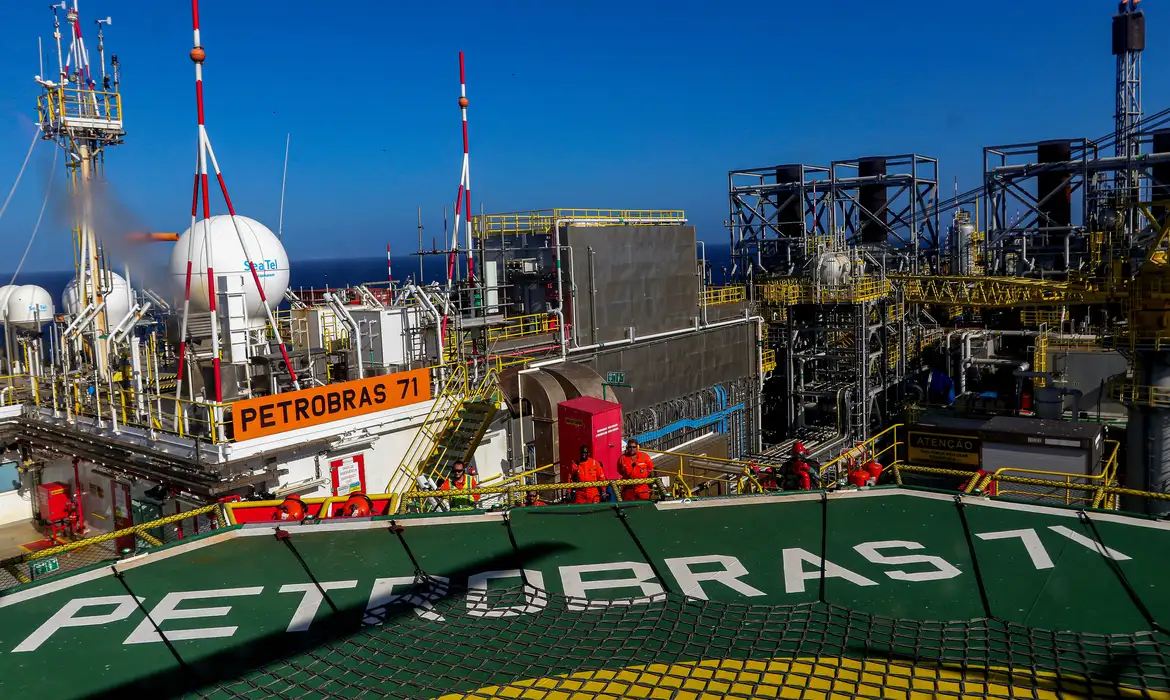
Brazil’s oil and gas production reached **4.921 million barrels of oil equivalent per day (boe/d)** in November 2025, according to data released by the National Agency for Petroleum, Natural Gas and Biofuels (ANP).[1][2][3] The country extracted **3.773 million barrels per day (bbl/d)** of crude oil, marking a decline of 6.4% compared to the previous month but demonstrating robust year-over-year growth of 13.9% when compared to November 2024.[1][2]
Natural gas production totaled **182.57 million cubic meters per day (m³/d)**, representing a monthly decrease of 6.3% but an annual increase of 15.7%.[2][3] This combined output underscores Brazil’s position as a significant global energy producer, with momentum driven primarily by offshore operations in the pre-sal region.
The pre-sal area continued to dominate national production, accounting for **79.6% of total output** with 3.913 million boe/d.[1][2] Within this region, 178 active wells produced 3.024 million bbl/d of petroleum and 141.27 million m³/d of natural gas.[1][2] While pre-sal production decreased 8.5% from October, it demonstrated considerable strength with a 15.6% annual increase.[1][2]
Gas utilization efficiency remained high at **96.9%**, with 61.87 million m³/d made available to the market and 5.71 million m³/d flared.[1] The flaring volume increased by 5.0% compared to October but declined 8.1% year-over-year.[1]
Maritime fields generated the vast majority of Brazil’s hydrocarbon output, accounting for 97.7% of petroleum production and 85.7% of natural gas production.[1] Petrobras and its consortia partners were responsible for 89.35% of all production, operating across 6.082 wells—539 offshore and 5.543 onshore.[1]
The **Búzios field** in the Santos Basin’s pre-sal emerged as the leading petroleum producer with 744.30 thousand bbl/d, while the **Mero field** led natural gas production with 40.80 million m³/d.[1][2] The FPSO Almirante Tamandaré at Búzios was the highest-producing facility for crude oil at 239.453 bbl/d, and the FPSO Marechal Duque de Caxias at Mero topped gas production with 12.83 million m³/d.[1]